


The UAE Office Is Quietly Changing
Until recently, most offices in the UAE followed a basic formula of rows of workstations, a handful of meeting rooms and private cabins along the edges. The task was predictable, so it worked for years. Teams would all come in at the same time, work at the same workstation each day and meetings would largely be in person.
That’s no longer true.
Today, many companies in Dubai and Abu Dhabi operate with hybrid teams, flexible hours and digital-first operations. Employees flow through the day between collaborative work, video meetings, concentrated activities and remote communication. As work patterns evolve, so do office surroundings.
This is one reason why companies are paying more attention to how their workspaces are planned instead of simply filling rooms with furniture. In the UAE, businesses have started working more closely with office furniture specialists like Urban 411 Office Furniture to create workstation layouts that actually support day-to-day operations rather than just looking modern in photos.
Offices Are Becoming More Practical, Not Just Stylish
A few years ago, a lot of firms put a lot of emphasis on aesthetics. Open workplaces, fashionable colours and basic designs became popular in business environments in the Gulf. Looks still matter, but organizations are starting to understand that excellent design also has to solve genuine problems.
open workplaces can foster cooperation, but they can offer distractions. Employees on calls, quick conversations or virtual meetings might quickly interrupt those around them. So a lot of offices now have modest quiet sections and little meeting pods built into their design.
Instead of building out their facilities, organizations are employing smart office pods to:
- Quick team discussions
- Video calls and online meetings
- Private conversations
- Focused individual work
This is one of the reasons office pods have become increasingly visible in UAE workspaces, especially in companies trying to balance openness with privacy.
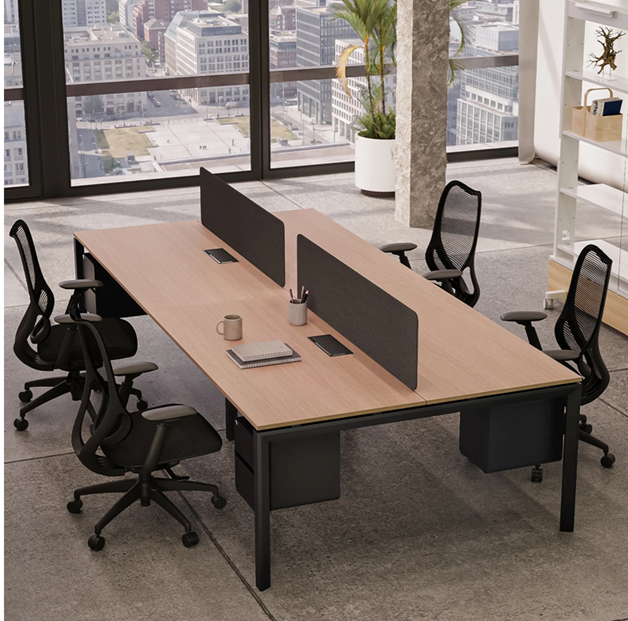
Workstations Need to Support Real Work Habits
One of the biggest mistakes firms make is to choose office furniture based on style or pricing alone. “A desk might look nice and modern, but if it doesn’t support the way employees really work, productivity suffers in the end.”
Now modern workstations have to contain:
- Multiple screens and devices
- Long hours of computer use
- Cable management and charging access
- Flexible seating arrangements
- Different team sizes and workflows
Companies are also beginning to realize more that employees don’t work the same all day long. One person may spend the morning working on individual duties and the afternoon working in a team. This is why fixed layouts are becoming less effective.
The trend has sparked greater interest in modular workstation systems that can be more easily reconfigured as teams expand or office demands evolve.
Ergonomics Is Finally Being Taken Seriously
For years, ergonomics was seen as a luxury, something only big firms and high-end offices could afford. That attitude is beginning to shift throughout the UAE.
Businesses are starting to realize that unhappy employees are less productive over time. Most companies don’t know how much poor posture, workplace weariness, and hours spent in a seated position can impact focus and energy levels.
This is generating a rising demand for:
- Ergonomic task chairs
- Better monitor positioning
- Adjustable workstation systems
- Desks that support movement throughout the day
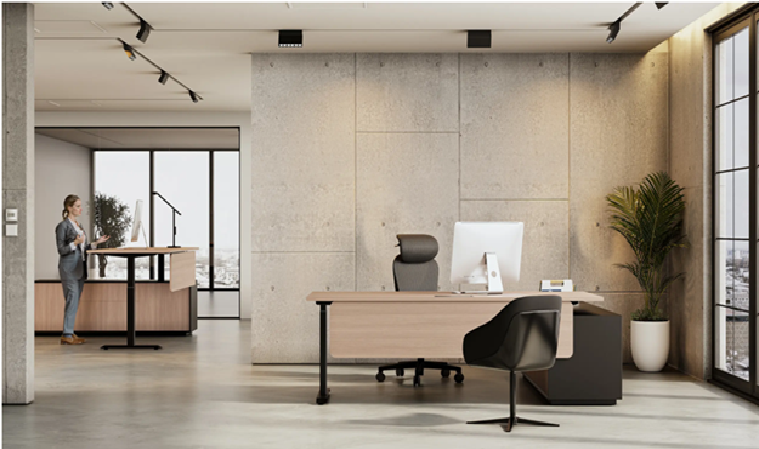
In the current day UAE, height-adjustable workstations are gaining popularity in companies as they allow employees to change from sitting to standing without disrupting workflow. Many workspace planners now consider them not as a luxury element but as part of a healthy long-term office design.
Space Planning Is Becoming Just as Important as Furniture
Interestingly, many firms learn that productivity issues are not necessarily due to workers or technology. Sometimes the problem is bad office arrangement.
A workspace with packed hallways, noisy desks, or poorly positioned meeting rooms can impede collaboration and lead to unnecessary frustration throughout the workday.
That’s why the discourse around workplace space planning has gotten so much larger as of late. Businesses are taking a closer look at:
- Employee movement within the office
- Collaboration flow between teams
- Noise distribution
- Privacy requirements
- Future expansion needs
Rather than buying furniture piece by piece, companies are starting to approach office planning more strategically.
The UAE Market Is Influencing Wider Gulf Workspace Trends
Dubai and Abu Dhabi are often the trial grounds for fresh workplace concepts before they expand across the entire GCC. Hybrid office formats, smart pods, ergonomic workstation solutions and flexible desk set-ups are already impacting the way companies in nearby Gulf markets are thinking about office architecture.
This has also raised expectations on suppliers of office furniture. Businesses now need more than products; they need practical solutions that meet today’s operations, technological needs and long-term growth objectives.
Final Thoughts
The modern UAE office is becoming more flexible, more human centric and considerably more practical than previously. Businesses are beginning to understand the direct impact office design has on productivity, collaboration and employee wellbeing.
Firms are beginning to think of office furniture not as a purchase, but as part of a bigger operating strategy. The purpose of modular workstation systems, ergonomic seating or smart office pods is no longer simply to create attractive offices – it’s to build environments that truly work better for the people using them every day.